A proper warm-up is like opening a bridge between rest and performance. It prepares
muscles and joints, reduces injury risk, and helps children mentally shift into “practice
mode.”
Step 1: General activation (3–4 minutes) Begin with simple movements to increase heart rate and body temperature: marching, light jogging in place, or gentle skipping. The goal is to feel a little warmer and more awake, not tired.
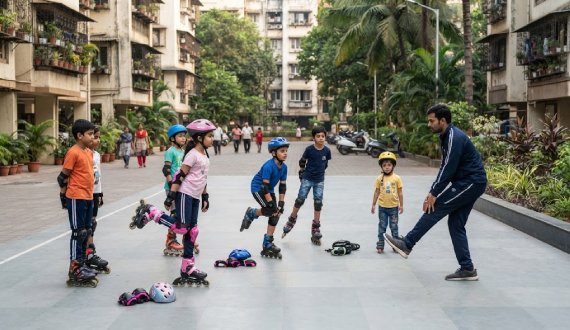
Step 2: Joint mobility (2–3 minutes) Focus on the joints that work hardest in skating: ● Ankle circles in both directions. ● Knee bends and gentle straightening. ● Hip circles. ● Shoulder rolls to release upper-body tension.
Step 3: Dynamic stretches (2–3 minutes) Use moving stretches rather than long holds, such as: ● Leg swings front-to-back while holding a support. ● Side lunges to warm up inner and outer thighs. ● Walking lunges or step-outs.
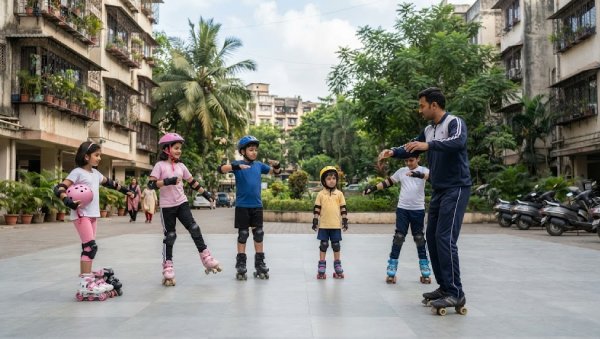
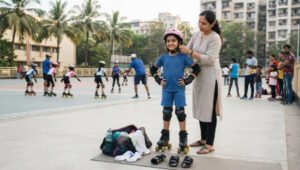
Step 4: Skate-specific prep (2–3 minutes) Once skates are on and gear is checked: ● Practice the basic stance: knees bent, back straight, arms slightly out. ● Gentle weight shifts from one foot to the other. ● Slow marching steps in place, then a short, controlled roll.
When warm-up becomes a consistent ritual, children learn another valuable lesson:
before you do something challenging, you prepare your body and mind with intention.
The minutes after a race are crucial. Children are emotionally open and sensitive; the way adults respond can either deepen their love for sport or... Continue reading
To a child, “district” or “state” sounds big and intimidating. Demystifying the process reduces anxiety and helps them walk in feeling prepared rather than overwhelmed.... Continue reading
At grassroots level, children usually see a mix of fun formats and formal races. Understanding the options helps parents and skaters choose events that match... Continue reading
A child is “ready” not just when they can skate fast, but when they are physically, technically, and emotionally prepared for a more structured challenge.... Continue reading



Add comment