At grassroots level, children usually see a mix of fun formats and formal races.
Understanding the options helps parents and skaters choose events that match their
level.
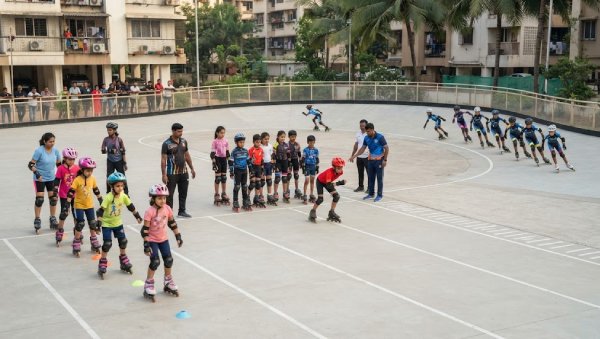
Common types of kids’ skating events
● Straight distance races:
● Simple formats like 100 m, 200 m, or 400 m on a rink or track. ● Sometimes run as individual heats by age and skill level.
● Lap / time-based races:
● “X laps of the rink” or “how far you go in Y minutes.” ● Emphasises pacing and endurance more than short bursts of speed.
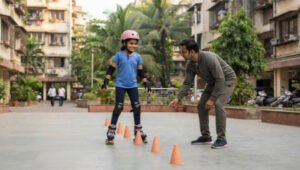
● Obstacle / skills courses:
● Children navigate cones, small jumps, or figure-eight patterns, often against the clock. ● Good for younger skaters because they highlight control and technique, not just raw speed.
● Relays and team races:
● Teams of two or four children each skate a section and tag the next skater. ● Great for learning teamwork and reducing individual pressure.
Categories and grouping
● By age:
● Typical brackets might be under-6, under-8, under-10, etc., so children compete with peers of similar age.
● By level/grade:
● Beginner, intermediate, advanced categories based on test levels or coach assessment, especially in artistic or figure-style events.
● By discipline:
● Speed (inline/quad), artistic routines, or skills demonstrations depending on the event.
Parents should always check the organiser’s rulebook or information sheet and ask the
coach which event gives the child the best “first taste” of competition—not the biggest
medal chance, but the best learning experience.
The minutes after a race are crucial. Children are emotionally open and sensitive; the way adults respond can either deepen their love for sport or... Continue reading
To a child, “district” or “state” sounds big and intimidating. Demystifying the process reduces anxiety and helps them walk in feeling prepared rather than overwhelmed.... Continue reading
A child is “ready” not just when they can skate fast, but when they are physically, technically, and emotionally prepared for a more structured challenge.... Continue reading
Goals turn vague dreams into clear direction. For children, the art lies in keeping goals small, visible, and achievable, so that each success fuels motivation... Continue reading


Add comment