The minutes after a race are crucial. Children are emotionally open and sensitive; the
way adults respond can either deepen their love for sport or quietly damage it.
Step 1: Start with connection, not correction
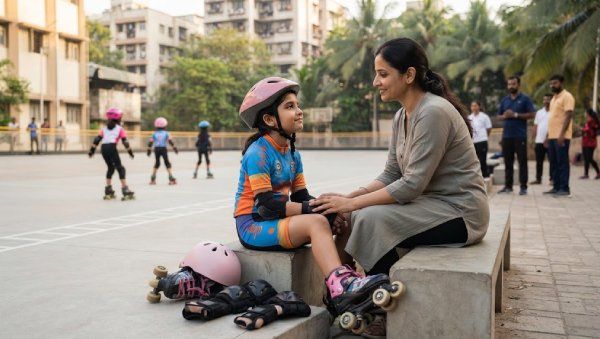
● First words should acknowledge effort: “You skated bravely today,” or “You managed your nerves well,” before speaking about results. ● Share what you felt proud of: their start, their attempt to overtake, or simply the courage to show up and race.
Step 2: Let them speak first
● Ask open questions: “How did it feel out there?” or “What did you like most and what felt hard?” ● Listen without interrupting or quickly “fixing” their feelings; this helps them process and builds emotional intelligence.
Step 3: Focus on specifics and learning, not labels
● Instead of “You were too slow,” try: “Did you notice at the second turn your knees got a bit straight? Maybe we can work with coach on staying low there next time.” ● Frame observations as neutral facts and future plans, not judgments about ability: “Next time we can practice starts more” rather than “You’re bad at starts.”
Step 4: Separate result from identity
● Emphasise that a time or position is information, not a verdict on who they are. ● Remind them that even high-level skaters use races as feedback to improve training.
Step 5: Close with encouragement and choice
● End the conversation with a sense of direction: “What’s one thing you’d like to improve before the next race?” ● Affirm their agency: “I’m proud of you for taking part. When you’re ready, we’ll talk with the coach about the next steps.”
Handled this way, competitions become exactly what they should be for children: a
structured playground where they learn to prepare, perform, learn from outcomes, and
keep their love for the sport alive.
To a child, “district” or “state” sounds big and intimidating. Demystifying the process reduces anxiety and helps them walk in feeling prepared rather than overwhelmed.... Continue reading
At grassroots level, children usually see a mix of fun formats and formal races. Understanding the options helps parents and skaters choose events that match... Continue reading
A child is “ready” not just when they can skate fast, but when they are physically, technically, and emotionally prepared for a more structured challenge.... Continue reading
Goals turn vague dreams into clear direction. For children, the art lies in keeping goals small, visible, and achievable, so that each success fuels motivation... Continue reading


Add comment