Falling is not a failure in skating; it is part of the curriculum. Teaching children how to
fall transforms fear into skill and prevents many common injuries.
From a biomechanical point of view, the goal is to reduce impact forces and protect
vulnerable joints. When a child falls from a tall, stiff posture, the distance to the ground
is greater and the impact is harder, especially on the wrists and head. That is why
coaches constantly remind skaters to maintain bent knees and a low center of gravity.
Key principles of safe falling:
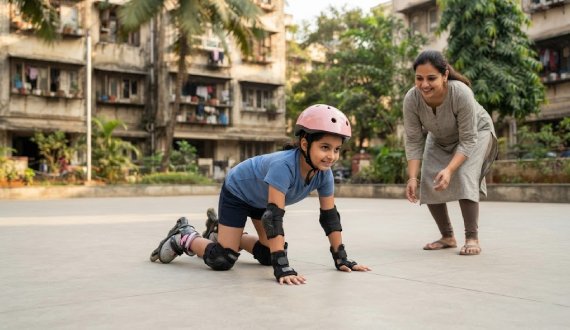
Stay low: The more the knees are bent and the hips lowered, the shorter the fall distance and the lower the impact.
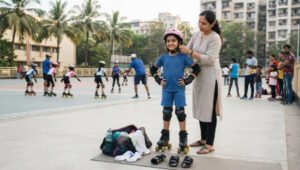
Use pads, not bare joints: Children should be taught to fall onto their knee and wrist guards rather than reaching out with straight arms and open palms.
Protect the head: Chin should tuck gently toward the chest, and arms should not flail backward where they can’t protect the body.
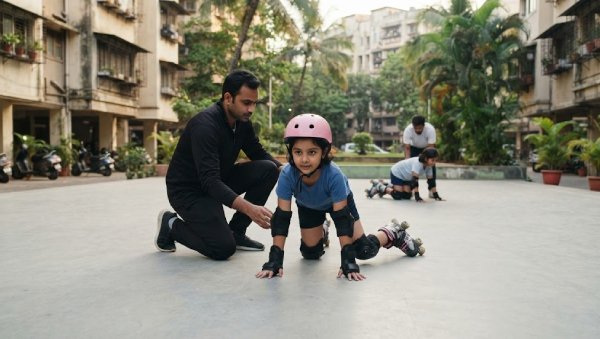
Coaches often practice “controlled falls” on soft surfaces like grass or mats before
children ever skate at speed. They learn drills like: squat low, gently tip forward onto
pads, and then practice getting up—rolling to hands and knees, bringing one foot
forward, and pushing to stand. Over time, children internalize that a fall is something
they can handle, not something to fear
This reframing is powerful. When a child learns to fall safely and get up calmly, they gain
a deep message: “If something goes wrong, I have the tools to recover.” That belief goes
far beyond the rink.
The minutes after a race are crucial. Children are emotionally open and sensitive; the way adults respond can either deepen their love for sport or... Continue reading
To a child, “district” or “state” sounds big and intimidating. Demystifying the process reduces anxiety and helps them walk in feeling prepared rather than overwhelmed.... Continue reading
At grassroots level, children usually see a mix of fun formats and formal races. Understanding the options helps parents and skaters choose events that match... Continue reading
A child is “ready” not just when they can skate fast, but when they are physically, technically, and emotionally prepared for a more structured challenge.... Continue reading


Add comment