Gliding is the magic moment when children realize they are truly “skating.” To reach that
point safely and confidently within the first month, progress must be gradual and
structured.
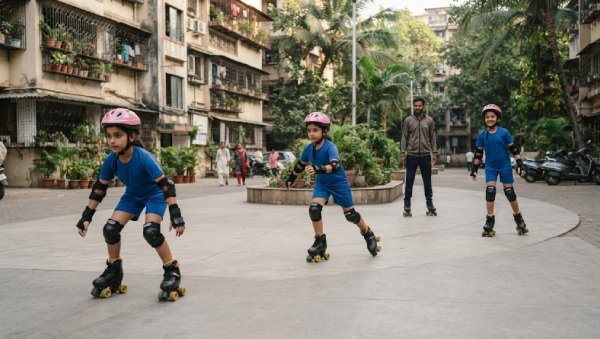
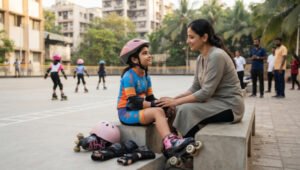
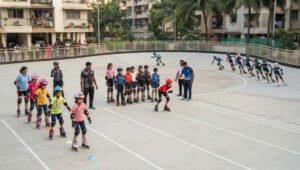
Week 1: Comfort on skates ● Practice standing in basic stance while holding a stable support (wall, railing, or coach’s hands). ● Marching in place with small, deliberate steps to get used to rolling wheels. ● Introduce safe-fall drills so that fear of falling doesn’t block progress.
Week 2: Small controlled movements
● Walk forward in short steps while staying low, still holding support if needed. ● Play slow “follow the leader” games that encourage movement without focusing on speed. ● Introduce the idea of gently pushing one foot outwards and rolling it back in—the earliest sensation of a glide.
Week 3: Short glides with support
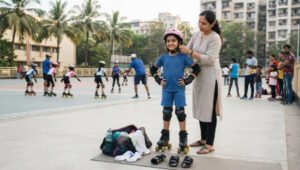
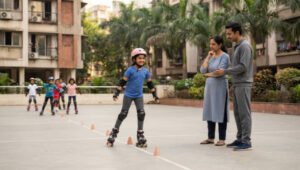
● From a few small pushes, ask the child to “freeze the feet” and let the wheels roll for one or two seconds while a coach or parent supports lightly at the elbows or waist. ● Use fun targets: glide to a marked line or colored cone, then stop and reset.
Week 4: Independent glides and simple stops
● Gradually reduce physical support as the child shows stability—maybe just a hand on the arm, then no hands. ● Encourage slightly longer glides, always returning to basic stance afterwards. ● Teach a simple stopping method appropriate to the skates (heel brake, plow stop, or “pizza” wedge) so that gliding feels safe, not out of control.
With patient progress, many children can move from “I’m scared to stand up” to short,
proud independent glides in just a few weeks, especially with positive reinforcement and
a fun, game-based environment.
The minutes after a race are crucial. Children are emotionally open and sensitive; the way adults respond can either deepen their love for sport or... Continue reading
To a child, “district” or “state” sounds big and intimidating. Demystifying the process reduces anxiety and helps them walk in feeling prepared rather than overwhelmed.... Continue reading
At grassroots level, children usually see a mix of fun formats and formal races. Understanding the options helps parents and skaters choose events that match... Continue reading
A child is “ready” not just when they can skate fast, but when they are physically, technically, and emotionally prepared for a more structured challenge.... Continue reading



Add comment