Progress doesn’t have to be limited to official class time. Short, safe home drills—many
of them without skates—can accelerate balance and coordination, especially for
beginners.
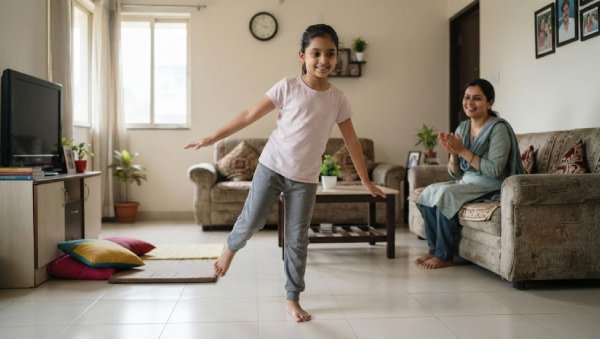
Off-skate balance drills (ideal for living rooms):
● Single-leg stands: Have the child stand on one foot near a wall or chair for 10–20 seconds, then switch sides. Over time, they can try closing their eyes for an extra challenge. ● Tightrope walk: Place a strip of tape or imagine a line on the floor and ask them to walk heel-to-toe along it, arms out like an airplane. ● Mini-squats: Feet shoulder-width apart, bending knees and keeping the back straight, then standing up again. This strengthens the legs and core needed for skating stance.
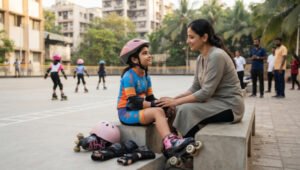
On-skate drills (with full safety gear and adult supervision):
● Marching in place: On a flat surface, practice the basic stance and gentle marching steps without moving forward too fast. ● Weight shifts: In stance, gently lift one foot slightly off the ground and hold, then switch sides. This builds single-leg stability needed for gliding. ● Duck walk: Heels together, toes slightly out, taking small outward steps forward—this reinforces proper push direction and balance.
Keep home sessions short (10–15 minutes) and light-hearted. The goal is to build
comfort and confidence, not add pressure.
The minutes after a race are crucial. Children are emotionally open and sensitive; the way adults respond can either deepen their love for sport or... Continue reading
To a child, “district” or “state” sounds big and intimidating. Demystifying the process reduces anxiety and helps them walk in feeling prepared rather than overwhelmed.... Continue reading
At grassroots level, children usually see a mix of fun formats and formal races. Understanding the options helps parents and skaters choose events that match... Continue reading
A child is “ready” not just when they can skate fast, but when they are physically, technically, and emotionally prepared for a more structured challenge.... Continue reading


Add comment