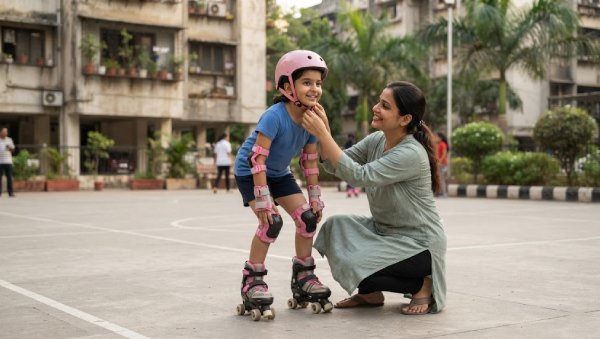
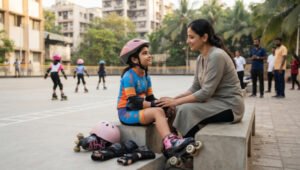
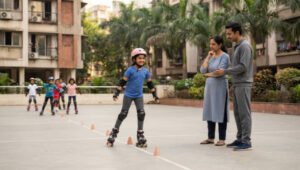
Before a child takes their first glide, safety has to be in place. Proper protective gear
does not take away the fun; it makes confidence and progress possible.
Non‑negotiable safety gear:
Helmet – A certified multi-sport or skating helmet to protect against head injury.
Wrist guards – To protect the small bones in the wrists, which often take the impact in falls.
Knee pads – To cushion forward and side falls.
Elbow pads – To protect when arms hit the ground during a loss of balance.
Optional but useful: padded shorts or hip protectors for very young or very nervous beginners.
How to fit each item correctly
Helmet fit:
Sits level on the head, not tilted back; the front edge should rest about two finger-widths above the eyebrows.
Straps form a “V” just below each ear and buckle snugly under the chin—you should be able to fit one or two fingers between strap and skin, but the helmet should not wobble when the child shakes their head.
Wrist guards:
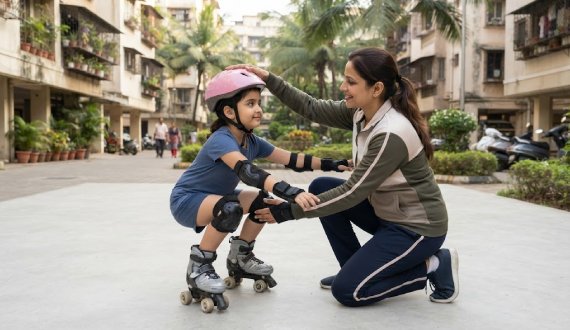
The hard plate should sit under the palm and wrist, not twisted to the side.
Straps should be tight enough that the guard doesn’t rotate or slide off, yet not so tight that fingers tingle or change color.
Knee and elbow pads:
Straps should “hug” the joint comfortably; if the child bends their knees or elbows, the pads should stay in place and not slide down.
If pads leave deep marks or restrict movement, they are too tight; if they spin around the limb, they are too loose.
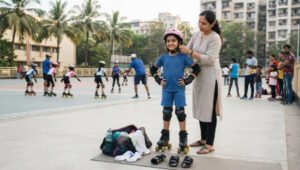
Before every session, do a quick “gear check”: press the helmet, tug the pads, check Velcro, and ask the child to bend, squat, and stretch their arms to ensure everything stays secure. When gear is fitted correctly, children feel protected—and that feeling is the foundation of courage.
The minutes after a race are crucial. Children are emotionally open and sensitive; the way adults respond can either deepen their love for sport or... Continue reading
To a child, “district” or “state” sounds big and intimidating. Demystifying the process reduces anxiety and helps them walk in feeling prepared rather than overwhelmed.... Continue reading
At grassroots level, children usually see a mix of fun formats and formal races. Understanding the options helps parents and skaters choose events that match... Continue reading
A child is “ready” not just when they can skate fast, but when they are physically, technically, and emotionally prepared for a more structured challenge.... Continue reading

Add comment