To a child, “district” or “state” sounds big and intimidating. Demystifying the process
reduces anxiety and helps them walk in feeling prepared rather than overwhelmed.
Before the event
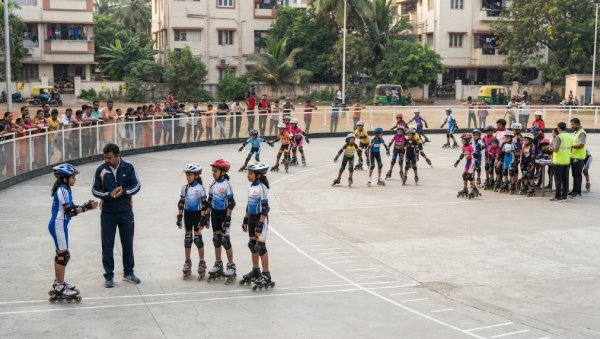
● In the weeks before, the coach usually selects events and distances based on the child’s level, and works on specific skills or a race “program” (for artistic/figure events). ● Parents may receive information on age categories, race format, rules (for example, helmet requirements), and a tentative timetable.
On the competition day
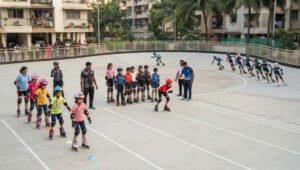
● Families arrive early, register if required, and find their seating or team zone. ● There is often a warm-up period on the track or rink where skaters can feel the surface and space before actual racing begins. ● Events are usually run category by category—for example: under-8 girls 200 m, under-8 boys 200 m, and so on—sometimes with heats and finals depending on the number of participants. ● COfficials or referees manage race order, start procedures, and ensure safety; there may be clear rules on false starts, lane changes, or overtaking
What your child experiences
● Waiting periods: a lot of time is spent waiting between warm-up, race briefing, and the actual start. ● Mixed emotions: excitement, nervousness, curiosity, and sometimes disappointment if things don’t go as imagined. ● Learning moments: they see other children skate, observe different techniques, and realise they are part of a bigger sporting community.
After the race
● Results are announced; sometimes there are medals or certificates for top finishers and all participants. ● Coaches and parents have a chance to congratulate effort and note what to work on next season. ● At district/state levels, the experience itself—simply being there, following rules, managing nerves—is already a big step in the child’s sporting journey.
The minutes after a race are crucial. Children are emotionally open and sensitive; the way adults respond can either deepen their love for sport or... Continue reading
At grassroots level, children usually see a mix of fun formats and formal races. Understanding the options helps parents and skaters choose events that match... Continue reading
A child is “ready” not just when they can skate fast, but when they are physically, technically, and emotionally prepared for a more structured challenge.... Continue reading
Goals turn vague dreams into clear direction. For children, the art lies in keeping goals small, visible, and achievable, so that each success fuels motivation... Continue reading


Add comment