For many children, the hardest part of falling is not the physical pain; it is the
embarrassment. They worry others are watching, judging, or laughing. Turning falls into
learning moments protects both their body and their self-esteem.
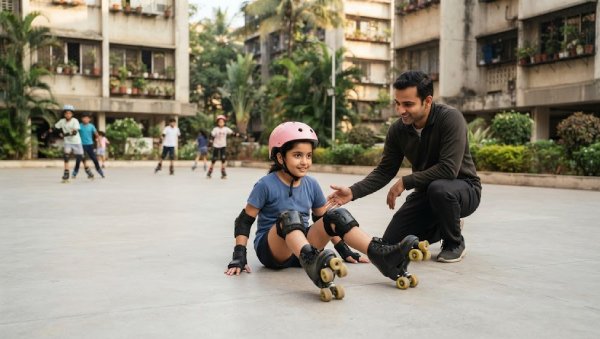
Coaches can adopt a simple rule: “Every fall must teach us something.” After a fall, once
the child is safe and calm, ask gentle questions: Were your knees bent? Were you
looking down instead of ahead? Did you go faster than you were ready for? This shifts
the focus from “I am clumsy” to “I can improve a specific habit.”
Some academies even celebrate “brave falls”—attempts made while learning a new
skill—by giving small acknowledgments or mentioning them in class recaps. When
students see that trying is valued more than perfection, shame loses its power.
Reflection rituals help too. At the end of the session, ask each child to share one thing
they fell on and one thing they improved. This normalizes falling as a common
experience and reinforces the idea that progress and mistakes travel together.
The minutes after a race are crucial. Children are emotionally open and sensitive; the way adults respond can either deepen their love for sport or... Continue reading
To a child, “district” or “state” sounds big and intimidating. Demystifying the process reduces anxiety and helps them walk in feeling prepared rather than overwhelmed.... Continue reading
At grassroots level, children usually see a mix of fun formats and formal races. Understanding the options helps parents and skaters choose events that match... Continue reading
A child is “ready” not just when they can skate fast, but when they are physically, technically, and emotionally prepared for a more structured challenge.... Continue reading



Add comment